

The birth of the Fedwire Funds Service
Before the Federal Reserve was established, long-distance payments in the U.S. were slow and costly because the settlement of interbank payments relied on physical currency deliveries. In 1913, the Federal Reserve Act was signed into law, establishing today’s Federal Reserve System and granting each Federal Reserve Bank the power to circulate currency; exchange notes for gold, gold coin or certificates; and contract for loans.
In 1915, the Fed streamlined interbank payments by enabling immediate settlements through centralized balances. That same year, to facilitate funds transfers among Federal Reserve Banks, the Fed created the Gold Settlement Fund, later renamed the Interdistrict Settlement Account (Off-site).
The first communication network was called the Federal Reserve Leased Wire System, which used telegraph wires and Morse code to enable the Fed’s large-value funds transfers and transmit other information among the 12 Federal Reserve Banks, the Board of Governors and U.S. Department of the Treasury.
Early technological improvements
After its establishment in the 1910s, the Federal Reserve has continued to make technological improvements that reinforce the resilience of the Fedwire Funds Service and standardize Fedwire operations nationwide.
These improvements include:
- The introduction of teletype machines to transmit messages in the 1930s, which replaced Morse code
- A major overhaul of the telegraph system in 1953 to relieve network congestion and introduce more automation
- A second major overhaul in 1970 to begin using telephone lines to transmit computerized messages
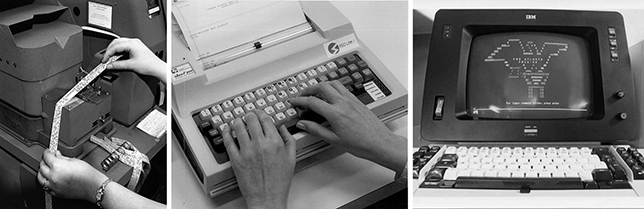
These changes also added additional capacity for wire transfers as volume on the Fedwire Funds Service grew from 2 million transfers annually in 1953 to 52 million in 1987, 100 million in 1998 and over 209 million in 2024.
Toward today’s Fedwire Funds Service
The Federal Reserve Banks continued improving the automation and security of the Fedwire system after the 1970s. The shift to sending computerized messages via telephone lines introduced the potential for high-speed data transfers. As the banking industry consolidated in the 1980s and large banks increasingly began sending messages across multiple Fed districts, the Fed further standardized its wire transfer services. The implementation of standardized software was, at the time, the latest innovation in a long line of continuous improvements implemented by the Fed. In 1995, the Federal Reserve unified Fedwire operations under what is known today as Federal Reserve Financial Services.
As it evolved from telegraph lines to high-speed data networks, the function of the Fedwire Funds Service remained unchanged: to allow financial institutions to settle large-value transfers using their master account balances at Federal Reserve Banks. Today, it is a highly secure electronic network that financial institutions, businesses and government agencies rely on to make mission-critical transactions. While institutions generally use the Fedwire Funds Service for large-value payments, they can also use it to make interbank transfers or settle loans. Additionally, they can use the Fedwire Securities Service for securities transactions.
For more information about the history of the Fedwire Funds Service, read an essay about the history of the Fedwire Funds Service on FederalReserveHistory.org (Off-site).